Swords · Ten
Ten of Swords
ending · bottom · dawn
The end of a thing, reached fully.
- Suit
- Swords
- Element
- Air
- Reversed
- early recovery
What the card shows
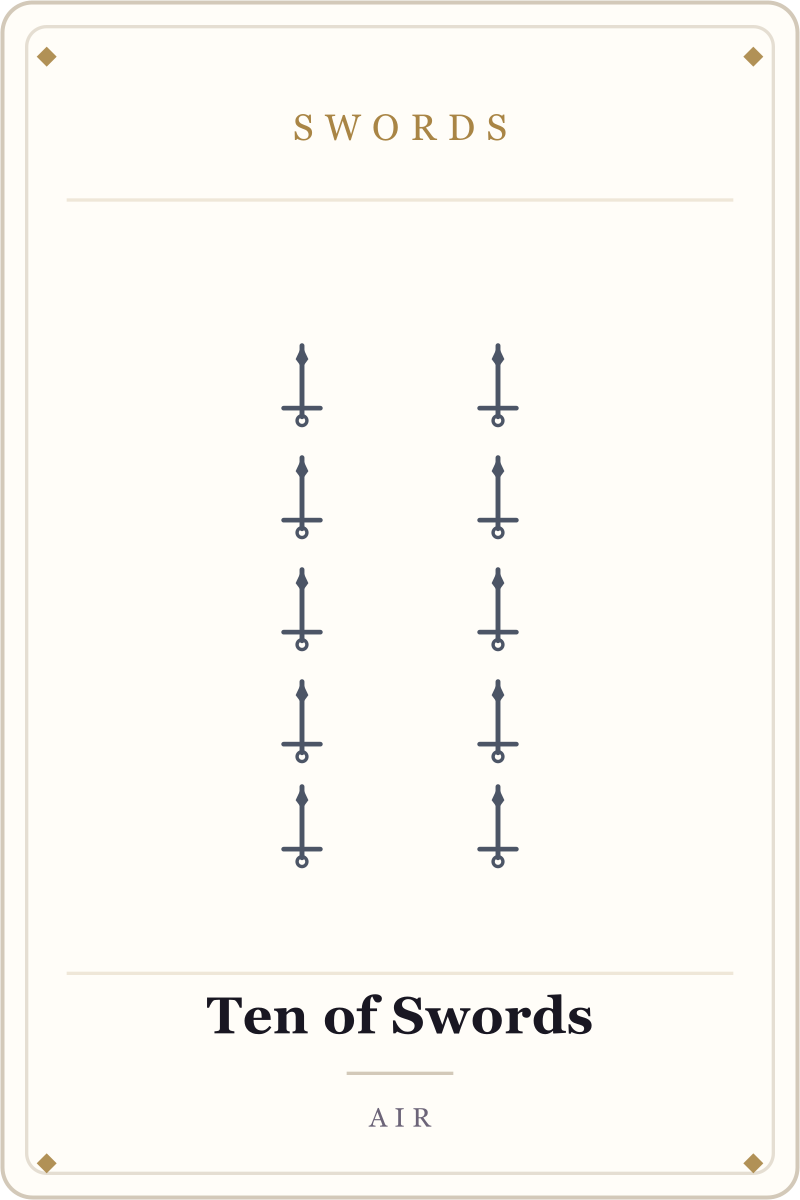
A figure lies face down with ten swords in their back, a red cloak spread over them. The sky is black at the top and gold at the horizon. The water is still.
Upright
The end of a thing, reached fully. The card is dramatic and almost never literal. It asks you to stop trying to save what has already ended, and to let the bottom be the bottom.
Reversed
The recovery has started, or the ending is being resisted because it was not the shape you wanted. Also the tendency to get up too early.
What it is not
Often read as catastrophe. It is an ending that has gone as far as it can, and the horizon behind it is already light.
Where it turns up
A company closing, a relationship that ended badly, a project that failed in public, a year that took everything. Also the morning after the worst week.
What to do with it
Let one thing be over, without a plan for the next.
A ten-minute practice
Write what ended, in the past tense. Then write what you are still doing as if it had not. Stop one of those things today. The practice is to let the ending reach your calendar.
Three questions to sit with
- What has ended?
- What are you still trying to revive?
- What does the first day after look like?
In a three-card spread
- Past
- The Ten of Swords in the past position describes what shaped the question, not what caused it.
- Present
- In the present, the card is the question as it stands today. Read it slowly, and notice what you resist.
- Future
- In the future position it is a direction, not an event: what the situation is turning into if nothing changes.
Ten of Swords is a reflective prompt, not a prediction. Nothing here is medical, legal or financial advice, and no card is a promise about what will happen.