Cups · Ten
Ten of Cups
belonging · table · ordinary good
Belonging that has been built, not found.
- Suit
- Cups
- Element
- Water
- Reversed
- performed picture
What the card shows
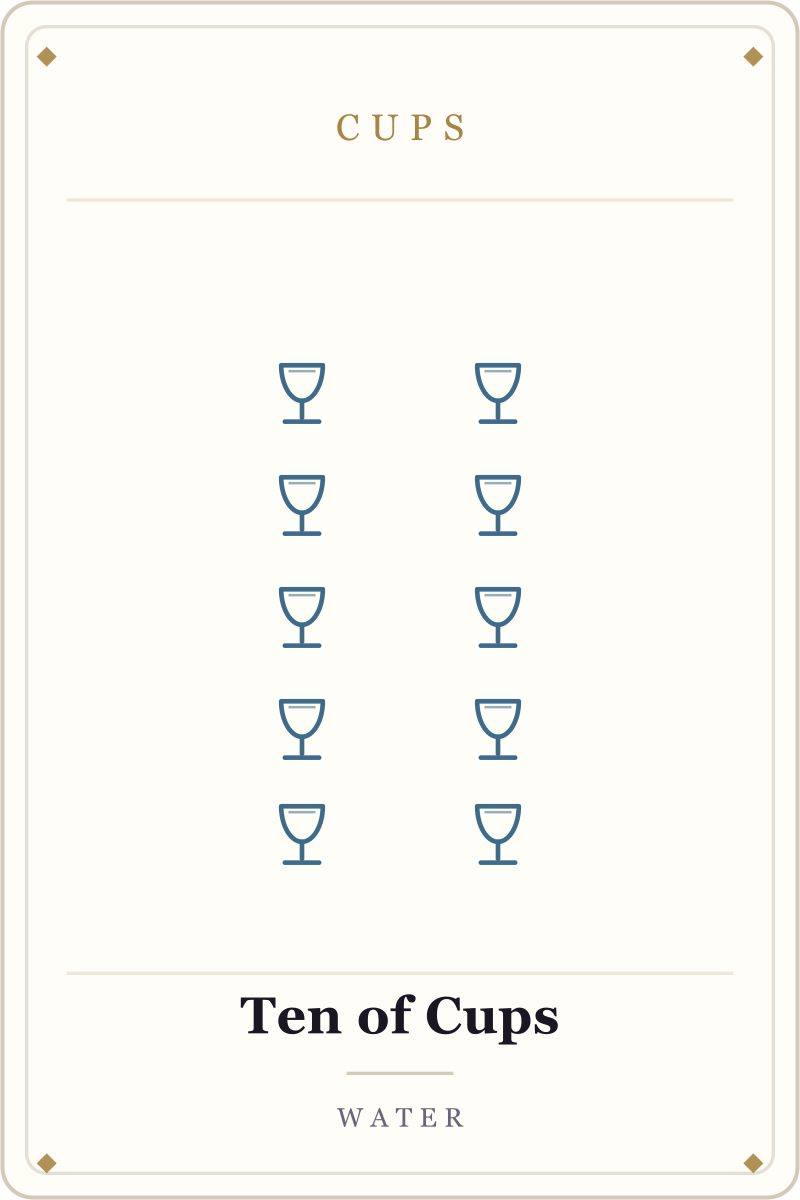
Two adults stand with their arms raised, two children dancing beside them, ten cups arranged in a rainbow above a small house and a river. The scene is warm and slightly too perfect.
Upright
Belonging that has been built, not found. The card is about the ordinary version of a good life: people who know you, a table that gets used. It asks you to notice what you already have and who is missing.
Reversed
The picture is being performed. Or the family you have does not match the one you were promised, and the gap is being managed silently.
What it is not
Often read as the ideal family. It is the ordinary table, which is smaller and more specific than the picture on the card.
Where it turns up
A holiday where everyone gets along, a house that finally feels like yours, a friendship group that has lasted. Also the photo that took four attempts.
What to do with it
Invite one person to the table this month.
A ten-minute practice
Write the names of the people who would notice if you disappeared for a week. Then write the last time you spoke to each. Choose one and call them. The exercise is maintenance, not sentiment.
Three questions to sit with
- Who is at your table?
- What picture are you performing?
- What would ordinary good look like?
In a three-card spread
- Past
- The Ten of Cups in the past position describes what shaped the question, not what caused it.
- Present
- In the present, the card is the question as it stands today. Read it slowly, and notice what you resist.
- Future
- In the future position it is a direction, not an event: what the situation is turning into if nothing changes.
Ten of Cups is a reflective prompt, not a prediction. Nothing here is medical, legal or financial advice, and no card is a promise about what will happen.