Wands · Six
Six of Wands
recognition · visibility · arrival
Recognition that arrives after the work, and the discomfort of being seen.
- Suit
- Wands
- Element
- Fire
- Reversed
- thin applause
What the card shows
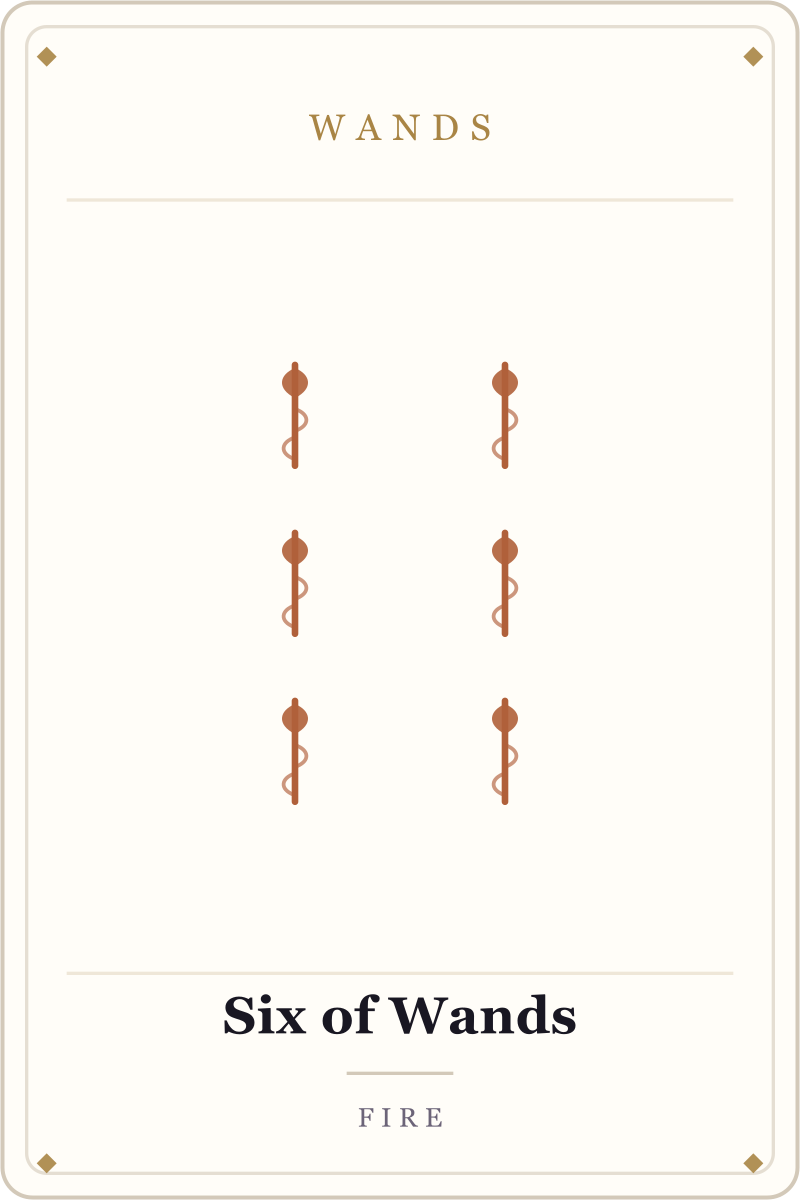
A rider on a white horse enters a crowd, a laurel wreath on his head and another on his wand. People around him raise their hands. His horse is decorated and his posture is careful.
Upright
Recognition that arrives after the work, and the discomfort of being seen. The card is not only about praise, it is about what praise does to your sense of the work. It also asks who is not in the crowd.
Reversed
The win is real and the audience is thin, or the praise has become the point. Either way, the card asks what you would still do if nobody clapped.
What it is not
Often read as fame. It is recognition inside a small circle, and the card asks what you did rather than what they said about it.
Where it turns up
A promotion announcement, a post that does better than expected, a parent finally saying they are proud. Also the letdown the day after a public success.
What to do with it
Write down what you learned, not what they said.
A ten-minute practice
Write down what you did to earn the recognition, not what people said about it. Then write who helped. Send one of them a message that names the specific thing they did.
Three questions to sit with
- Whose approval are you actually waiting for?
- What would you do if the applause never came?
- Who helped, and have you said so?
In a three-card spread
- Past
- The Six of Wands in the past position describes what shaped the question, not what caused it.
- Present
- In the present, the card is the question as it stands today. Read it slowly, and notice what you resist.
- Future
- In the future position it is a direction, not an event: what the situation is turning into if nothing changes.
Six of Wands is a reflective prompt, not a prediction. Nothing here is medical, legal or financial advice, and no card is a promise about what will happen.