Swords · Seven
Seven of Swords
evasion · shortcut · omission
Getting away with something, including from yourself.
- Suit
- Swords
- Element
- Air
- Reversed
- noticed
What the card shows
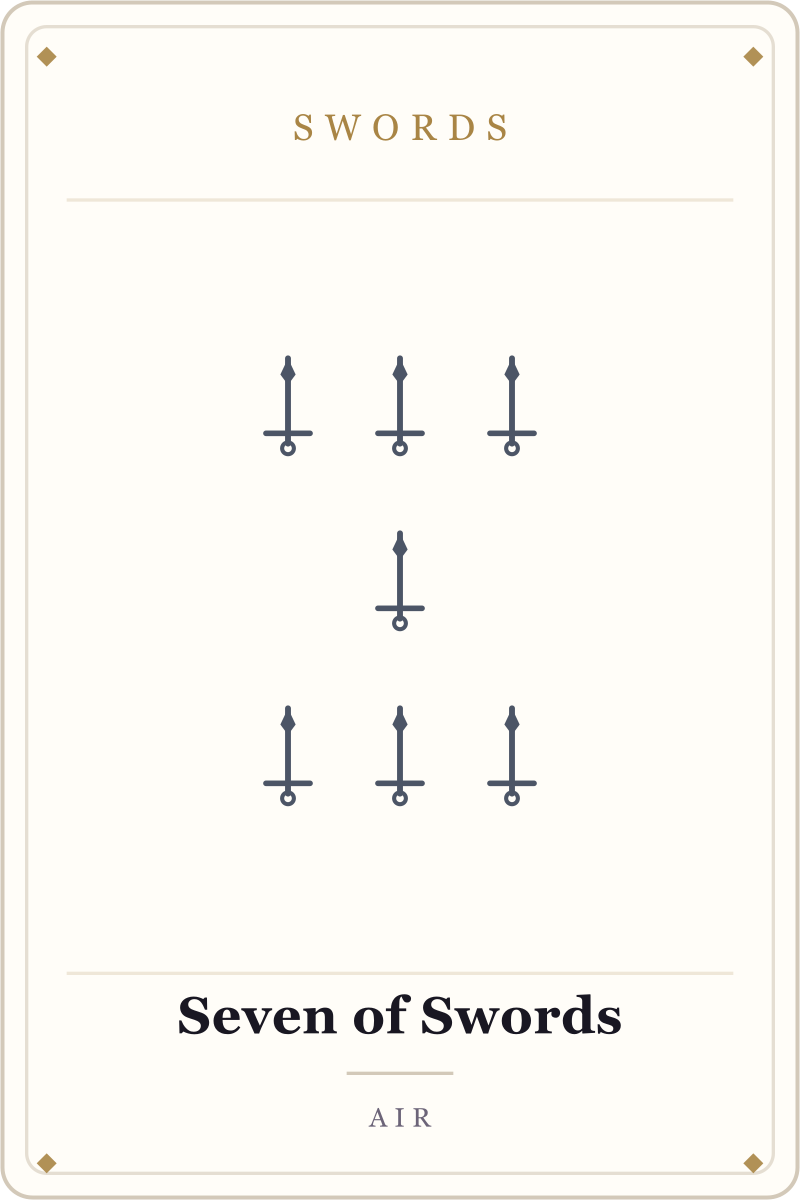
A figure tiptoes away from a camp carrying five swords, two still planted in the ground behind them. Tents are visible in the distance. The sky is pale and the figure is looking back.
Upright
Getting away with something, including from yourself. The card is about evasion, cleverness, and the story that makes the shortcut sound reasonable. It asks who is being protected by the omission.
Reversed
The trick is being noticed, or the guilt has become louder than the gain. Also the confession that would cost less than the keeping.
What it is not
Often read as theft by another. It is often self-deception, a shortcut that only works if nobody looks closely, including you.
Where it turns up
A project credited to the wrong person, a half-truth in a performance review, a budget line that moved. Also the excuse you have rehearsed.
What to do with it
Tell one person the unedited version.
A ten-minute practice
Write the story you told to make the shortcut acceptable. Then write the version a fair witness would tell. Notice which details you left out. The exercise is not confession, it is accuracy.
Three questions to sit with
- What are you taking that is not yours?
- Who pays for the shortcut?
- What would the honest version cost?
In a three-card spread
- Past
- The Seven of Swords in the past position describes what shaped the question, not what caused it.
- Present
- In the present, the card is the question as it stands today. Read it slowly, and notice what you resist.
- Future
- In the future position it is a direction, not an event: what the situation is turning into if nothing changes.
Seven of Swords is a reflective prompt, not a prediction. Nothing here is medical, legal or financial advice, and no card is a promise about what will happen.